

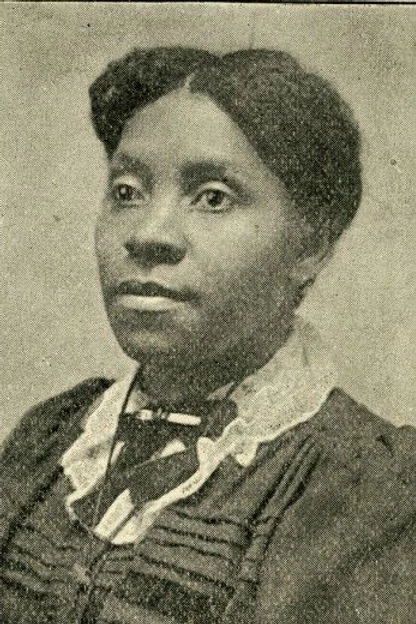
Sarah Rector, also known as Sarah Rector Campbell and Sarah Campbell Crawford, (March 3, 1902 – July 22, 1967) was an American oil magnate who was known as the “Richest Colored Girl in the World”.[1][2][3][4]
Sarah Rector was born in 1902 near the all-black town of Taft, located in the eastern portion of Oklahoma,[2] in what was then Indian Territory. She had five siblings. Rector’s parents, Rose McQueen and her husband, Joseph Rector (both born 1881),[5] were the Black grandchildren of Creek Indians before the Civil War,[6] and were descendants of the Muscogee Creek Nation after the Treaty of 1866. As such, they and their descendants were listed as freedmen on the Dawes Rolls, by which they were entitled to land allotments under the Treaty of 1866 made by the United States with the Five Civilized Tribes.[7]
Sarah’s father Joseph was the son of John Rector, a Creek Freedman.[8] John Rector’s father, Benjamin McQueen, was enslaved by Reilly Grayson, who was a Creek Indian. John Rector’s mother Mollie McQueen was the Muscogee Opothleyahola, who fought in the Seminole Wars and split with the tribe, moving his followers to Kansas. Sarah Rector was allotted 159.14 acres (64 hectares).[9] This was a mandatory step in the process of integration of the Indian Territory with Oklahoma Territory to form what is now the State of Oklahoma.[10][11]
Sarah Rector | |
|---|---|
| Born | March 3, 1902 Indian Territory (now Taft, Oklahoma, U.S.) |
| Died | July 22, 1967 (aged 65) Kansas City, Missouri, U.S. |
Resting place | Blackjack Cemetery, Taft, Oklahoma, U.S. |
| Education | Tuskegee University |
| Spouses |
|
| Children | 3 |
Sarah Rector, also known as Sarah Rector Campbell and Sarah Campbell Crawford, (March 3, 1902 – July 22, 1967) was an American oil magnate since childhood. Under the Treaty of 1866, due to birthright as a Black grandchild of Creek Indians born before the American Civil War, she received an allotment. It was discovered to be oil-rich and produced over US$300 (equivalent to $10,400 in 2025) per day, so she was known as the "Richest Colored Girl in the World".[1][2][3][4][5][6]
Biography
Early life and family
Sarah Rector was born in 1902 near the all-black town of Taft, located in Indian Territory. In 1907, it was absorbed as the eastern portion of the new state of Oklahoma.[2] She had five siblings. Her parents were Rose McQueen and husband Joseph Rector (both born 1881),[7] who were the Black grandchildren of Creek Indians enslaved before the Civil War.[8] Their ancestors became members of the Muscogee Creek Nation after the Treaty of 1866. As such, they and their descendants were listed as Freedmen on the Dawes Rolls. They were entitled to land allotments under the Treaty of 1866 made by the United States with the Five Civilized Tribes.[9] Because these tribes had allied with the Confederacy, the US required new treaties by which their slaves were freed and became citizens of these nations. This paralleled the abolition of slavery in the US.
Sarah's father Joseph was the son of John Rector, a Creek Freedman.[10] John Rector's father, Benjamin McQueen, had been enslaved by Reilly Grayson, a Creek Indian. John Rector's mother, Mollie McQueen, was enslaved by Muscogee chief Opothleyahola, who fought in the Seminole Wars and split with the tribe. He moved with his slaves and followers to Kansas.
Each member of the Rector household received headrights allotments as Creek land was distributed among members. Sarah Rector was allotted 159.14 acres (64 hectares).[11] The breakup of communal lands was a way to extinguish tribal rights in the process of integration of the Indian Territory with Oklahoma Territory to form what became the State of Oklahoma in 1907.[12][13]
Oil strike and wealth

The parcel allotted to Sarah Rector was located in Glenpool, 60 miles (97 km) from the Rector family home. Its infertile soil was considered unsuitable for farming, with better land being reserved for white settlers and Creek members of the tribe.
The Rector family lived simply but not in poverty; however, the $30 (equivalent to $1,000 in 2025) annual property tax on Sarah's parcel was such a burden that her father petitioned the Muskogee County Court to sell the land. His petition was denied because of certain restrictions placed on the land, so he was required to continue paying the taxes.[14]
To help cover this expense, in February 1911, Joseph Rector leased Sarah's parcel to the Standard Oil Company. In 1913, the independent oil driller B.B. Jones sank what became a "gusher" well, with a daily yield of 2,500 barrels (400 m3) of oil and US$300 (equivalent to $10,400 in 2025) of income. Oklahoma law at the time required assignment of "well-respected" whites to act as guardians for full-blooded Indians, black adults, and children who were citizens of Indian Territory with significant property and money.[15]
Thus, as soon as Sarah began to receive this windfall from oil drilling, there was pressure to change her guardianship from her parents to a local white resident. A family acquaintance named T.J. (or J.T.) Porter was chosen. Her allotment subsequently became part of the Cushing-Drumright Oil Field. In October 1913, she received royalties of $11,567 (equivalent to $377,000 in 2025).[14]
As news of Rector's wealth spread worldwide, she received requests for loans, money gifts, and marriage proposals, although she was only 11 years old.[14] Due to her wealth, in 1913, the Oklahoma Legislature made an effort to have her declared an honorary white, allowing her the benefits of elevated social standing in the segregated society, such as riding first-class on trains.[7]
In 1914, the African-American journal, The Chicago Defender, began to take an interest in Rector, just as rumors began that she was a white immigrant who was being kept in poverty. The newspaper published an article claiming mismanagement by the white guardians of her estate.[16] National African-American leaders Booker T. Washington and W. E. B. Du Bois both became concerned about Rector's welfare.[7] In June 1914, a special agent for the National Association for the Advancement of Colored People (NAACP), James C. Waters Jr., sent a memo to Du Bois regarding her situation. Waters had been corresponding with the Bureau of Indian Affairs and the United States Children's Bureau over concerns regarding the mismanagement of Rector's estate. He wrote of her white financial guardian: "Is it not possible to have her cared for in a decent manner and by people of her own race, instead of by a member of a race which would deny her and her kind the treatment accorded a good yard dog?"[4]
This prompted Du Bois to establish the Children's Department of the NAACP, which investigated claims of white guardians who were suspected of depriving black children of their land and wealth. Washington also intervened to help the Rector family.[2] In October of that year, Sarah was enrolled in the Children's School, a boarding school at the Tuskegee Institute in Alabama, headed by Washington. Upon graduation, she attended the Institute.[7]
Adulthood
Rector was a millionaire by the time she turned 18 in 1920. She owned stocks, bonds, a boarding house, businesses, and a 2,000-acre (810 ha) piece of prime river bottomland. At that time, she left Tuskegee and moved with her family to Kansas City, Missouri. She purchased a house on 12th Street.[17]
Rector enjoyed her wealth, with a comfortable life and a taste for fine clothing and cars. She hosted lavish parties and entertained celebrities such as Count Basie and Duke Ellington.[18]
Like many others, Rector lost most of her wealth during the Great Depression, and had to sell the mansion.[19] But, she remained solvent and lived comfortably for the rest of her life.[20]
Death
She died on July 22, 1967, at the age of 65. She is interred in Blackjack Cemetery in her childhood hometown of Taft.[21]
Personal life
Soon after moving to Kansas City, when she was 17 or 18, she married local businessman Kenneth Campbell in 1920.[4] The wedding was a very private affair with only her mother and Campbell's paternal grandmother present. The couple had three sons, Kenneth (born 1925), Leonard (born 1926), and Clarence (born 1929), and they divorced in 1930.[7] In 1934, she married restaurant owner William Crawford, and they remained together until her death in 1967.[4][22]
Legacy
Rector's house in Kansas City, known as the Rector House, was purchased in the 2010s by United Inner City Services, a nonprofit organization for historical and cultural preservation.[17]
In media
Sarah Rector's fight for her oil wealth was adapted into the film Sarah's Oil, shot primarily in Okmulgee, Oklahoma in mid-2024.[23] Rector was portrayed by Naya Desir-Johnson.[24]
See also
- Osage Indian murders, about oil wealth in Indian Territory
References
- ^ Chicago Defender November 4, 1922, page 1
- ^ a b c Patton, Stacey (Spring 2010). "The Richest Colored Girl in the World". The Crisis. pp. 31–34. ISSN 0011-1422. Retrieved May 14, 2017.
- ^ Trent, Sydney (September 3, 2022). "'World's Richest Negro Girl' inspired media ridicule, fascination, alarm". The Washington Post. ISSN 0190-8286. Retrieved March 8, 2023.
- ^ a b c d Dennis, Megan (July 31, 2018). "Sarah Rector". Kansas City Public Library. Archived from the original on October 10, 2018. Retrieved August 8, 2024.
- ^ Henley, Lauren N. (February 16, 2021). "The Richest Black Girl in America". Medium.
- ^ Bolden, Tonya (2014). Searching for Sarah Rector: The Richest Black Girl in America. New York: Abrams. ISBN 978-1-4197-0846-6. Retrieved August 11, 2024.
- ^ a b c d e "Remembering Sarah Rector, Creek Freedwoman". The African-Native American Genealogy Blog. April 24, 2010.
- ^ Henley, Lauren N. (February 16, 2021). "The Richest Black Girl in America". Truly*Adventurous. Retrieved February 21, 2021.
- ^ "Rector, Sarah". BlackPast.org. March 31, 2014.
- ^ Bolden 2014, p. 9.
- ^ Bolden 2014, p. 18.
- ^ Walton-Raji, Angela Y. (April 24, 2010). "The African-Native American Genealogy Blog".
- ^ Bolden 2014, p. 51.
- ^ a b c "Sarah Rector The Richest Black Girl In The World". Afrocentric Culture by Design. May 19, 2010. Archived from the original on February 14, 2017. Retrieved May 14, 2017.
- ^ Gerkin, Steve (March 24, 2015). "The Unlikely Baroness | This Land Press - Made by You and Me". This Land Press. Archived from the original on April 15, 2017. Retrieved May 14, 2017.
- ^ "Money over Race: The Story of Sarah Rector, the Black Girl So Wealthy She Was Considered to be White".
- ^ a b "United Inner City Services Hope Murals Bring Attention to the Rector House". May 17, 2019. Retrieved May 23, 2020.
- ^ "Black History Month – From the Archives – Sarah Rector: The Richest Colored Girl in the World". February 16, 2010. Retrieved December 20, 2017.
- ^ "Rector Mansion". African American Heritage Trail. Retrieved August 11, 2024.
- ^ "How did a young Oklahoman become known as "The Richest Black Girl in America"*?". KGOU - Oklahoma's NPR Source. Retrieved August 5, 2025.
- ^ Jones, Carmen (February 15, 1991). "Sarah Rector: Kansas City's First Black Millionairess". The Kansas City Call.
- ^ "EOC Black History Facts: Sarah Rector". Economic Opportunity Commission of Nassau County, Inc. February 10, 2017. Archived from the original on November 22, 2021. Retrieved November 22, 2021.
- ^ "From Freedman to Millionaire". Mvskokemedia. July 19, 2024. Retrieved July 30, 2024.
- ^ Leydon, Joe (November 7, 2025). "'Sarah's Oil' Review: Family-Friendly Drama Persuasively Depicts a Battle for Oil-Rich Land Not Far From the Period of 'Killers of the Flower Moon'". Variety. Retrieved February 27, 2026.
| International | |
|---|---|
| National | |
